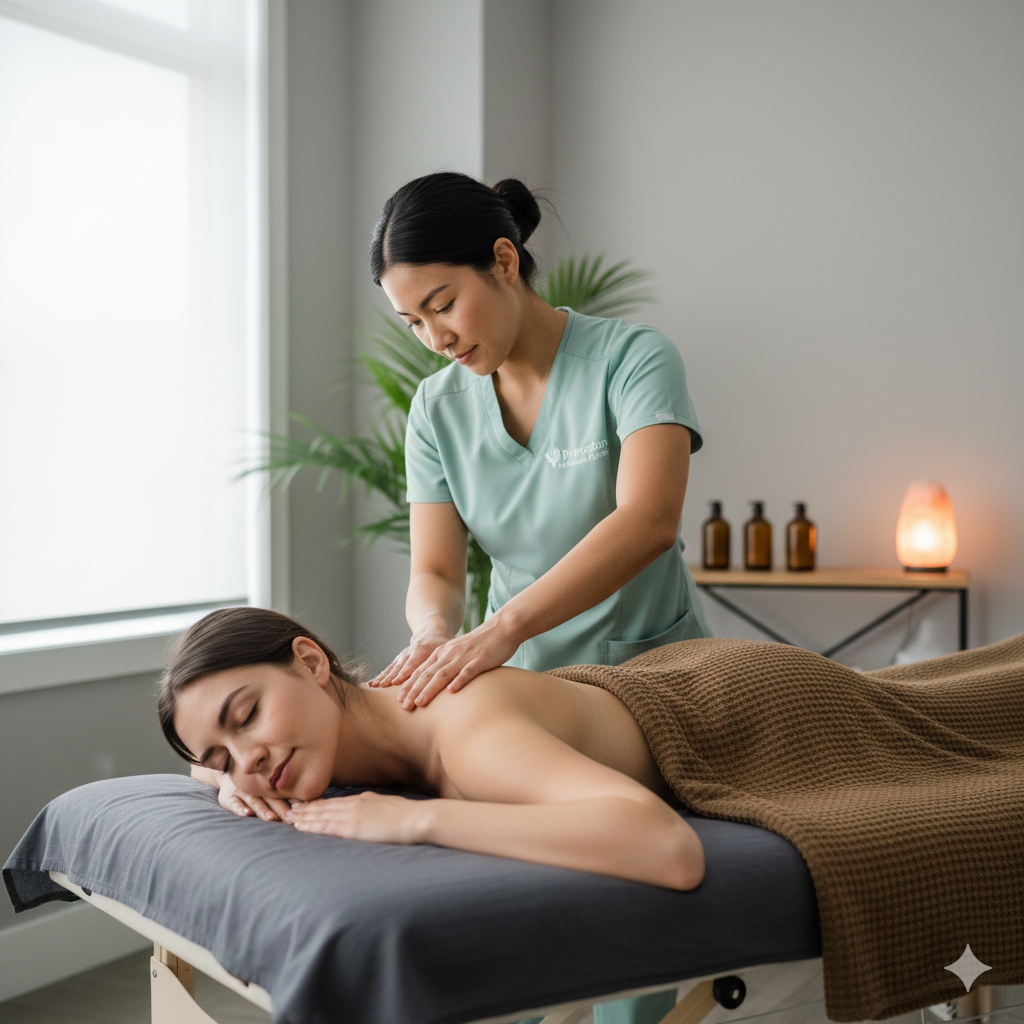
Tuina is a hands-on treatment rooted in traditional Chinese medicine. It uses rhythmic pressure, mobilization, and focused manual techniques to support circulation, soft tissue comfort, and energetic balance. Clients often choose it when they want bodywork that feels more directed and traditionally grounded than a standard relaxation massage.
For many people, Tuina feels purposeful from the start. The session often has more structure and rhythm, and it tends to appeal to clients who like treatment that feels intentional rather than purely soothing. Some book it because they are familiar with Chinese bodywork, while others simply notice that this style fits the way their body responds best.
Why clients book Tuina
Many clients choose Tuina when they want a stronger traditional bodywork experience that still feels purposeful and structured. It can complement acupuncture or stand alone as a full session.
What a Tuina visit may involve
Sessions are usually shaped around stiffness, heaviness, circulation concerns, and the feeling that the body is stuck rather than fully relaxed and moving well. Compared with standard massage, Tuina often feels more rhythmic and directional, with a stronger traditional Chinese treatment logic behind it.
Clients who respond well to this service often like that it does not feel vague or generic. It tends to feel like a more targeted style of manual care, especially for people who enjoy structured bodywork and do well with traditional Chinese techniques.
Good fit for
- General muscular tightness
- Stagnation and circulation support
- Clients who respond well to traditional Chinese manual therapy
When it may be combined with acupuncture
Some clients use Tuina as a stand-alone service, while others combine it with acupuncture as part of a broader traditional Chinese care plan. That combination can be especially appealing when someone wants both manual release and a larger regulation-based treatment approach.
What clients are usually comparing Tuina with
Tuina is often compared with massage therapy, deeper bodywork, and acupuncture. People usually land on this page when they want something more directed than a general relaxation massage, but are still deciding whether they want manual treatment, needle-based care, or a combination of both. That distinction matters, because Tuina tends to suit people who like clear rhythm and a stronger sense of structure in the hands-on work itself.
Clients across Richmond Hill, Markham, Vaughan, Thornhill, Aurora, Newmarket, North York, and Scarborough also often search for Tuina when they feel stiff, heavy, sluggish, or as though the body is not moving freely. They may not always describe the issue in medical language. Sometimes they simply know that a more traditional Chinese style of bodywork feels closer to what they need than a standard massage format.
How to know whether it is the right starting point
Tuina is often a strong fit if you want purposeful manual care, respond well to Chinese bodywork, and like a session that feels clearly guided rather than vague. If you mainly want insurance-eligible registered care, or if the issue feels more structural than traditional-bodywork oriented, another service may be the better first step.